Cofactors as recurring chemical strategies
Vitamin-derived cofactors are best understood by the difficult chemistry they enable across otherwise distant pathways.
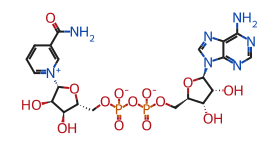 Nicotinamidehydride / electron transfer
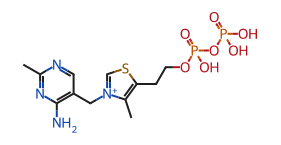 Thiamine diphosphatecarbon-fragment stabilization
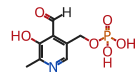 Pyridoxal phosphateamino-acid chemistry
Thiamin diphosphate stabilizes carbon-centered intermediates in oxidative decarboxylation and carbon-transfer reactions. Flavin and nicotinamide cofactors carry electrons through different molecular mechanisms. Coenzyme A activates and transfers acyl groups, while biotin carries activated carbon dioxide in carboxylation reactions.
Pyridoxal phosphate reorganizes amino-acid bonds through a covalent enzyme-bound intermediate. Tetrahydrofolate carries one-carbon units at several oxidation states, and cobalamin supports radical rearrangement or methyl-transfer chemistry that would be difficult by ordinary ionic mechanisms.
The Cofactor Lens searches the release-pinned atlas reaction inventory for these molecular forms and their synonyms. Its count describes coverage in this release—not dietary requirement, nutritional status or a claim that every cofactor-dependent human reaction is represented.
Ideas to carry into the map
- Cofactors solve recurring chemical problems.
- The active cofactor differs from its dietary precursor.
- A cofactor family can connect distant pathway territories.
- Coverage counts are not nutritional measurements.
Pathways in this field note
Metabolism and transport of the B-vitamin and vitamin-C families.
Assembly and handling of non-vitamin and vitamin-derived cofactor systems.
Folate transport and interconversion of tetrahydrofolate-bound one-carbon units.