Oxalosuccinate: a reaction intermediate, not a free-standing pool
The namesake compound is most useful as a lesson in scale: a net pathway arrow can conceal chemically meaningful enzyme-bound steps.
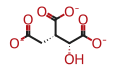 Isocitratealcohol substrate · C₆
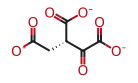 (S)-Oxalosuccinateβ-keto intermediate · C₆
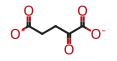 2-Oxoglutarate + CO₂product · C₅
Mitochondrial NADP-dependent isocitrate dehydrogenase couples oxidation of isocitrate to reduction of NADP+, then decarboxylates the oxidized intermediate. Rhea represents both the overall reaction and stepwise chemistry involving charge-specific (S)-oxalosuccinate.
The map therefore shows oxalosuccinate inside a mechanistic inset rather than as a large shared metabolite station. That visual choice keeps a transient intermediate from being mistaken for an independently measured cellular pool.
The NAD-dependent IDH3 route and NADP-dependent IDH2 route remain distinct because their cofactors, enzyme assemblies and physiological contexts are not interchangeable even when their displayed carbon products overlap.
Ideas to carry into the map
- Net reactions can conceal ordered steps.
- Charge and stereochemistry are part of chemical identity.
- Shared products do not make cofactor-specific routes equivalent.
Pathways in this field note
The mitochondrial reaction cycle that oxidizes acetyl units while exchanging intermediates with many biosynthetic routes.